
I'm just a fellow writer who is right in your shoes, muddling through as best as I can, and chronicling what I learn on the way. Comments and feedback are appreciated and encouraged. Interested in guest blogging or swapping links? Email me at carrieeckles@gmail.com.
Showing posts with label characters. Show all posts

Tuesday, June 11, 2013

I always want things to happen too soon

Do you even know what I mean by that? Of course you do. You're a writer. You've experienced the extremes of writerness, where your mind isn't your mind anymore, but a deranged entity held captive by your characters and story.

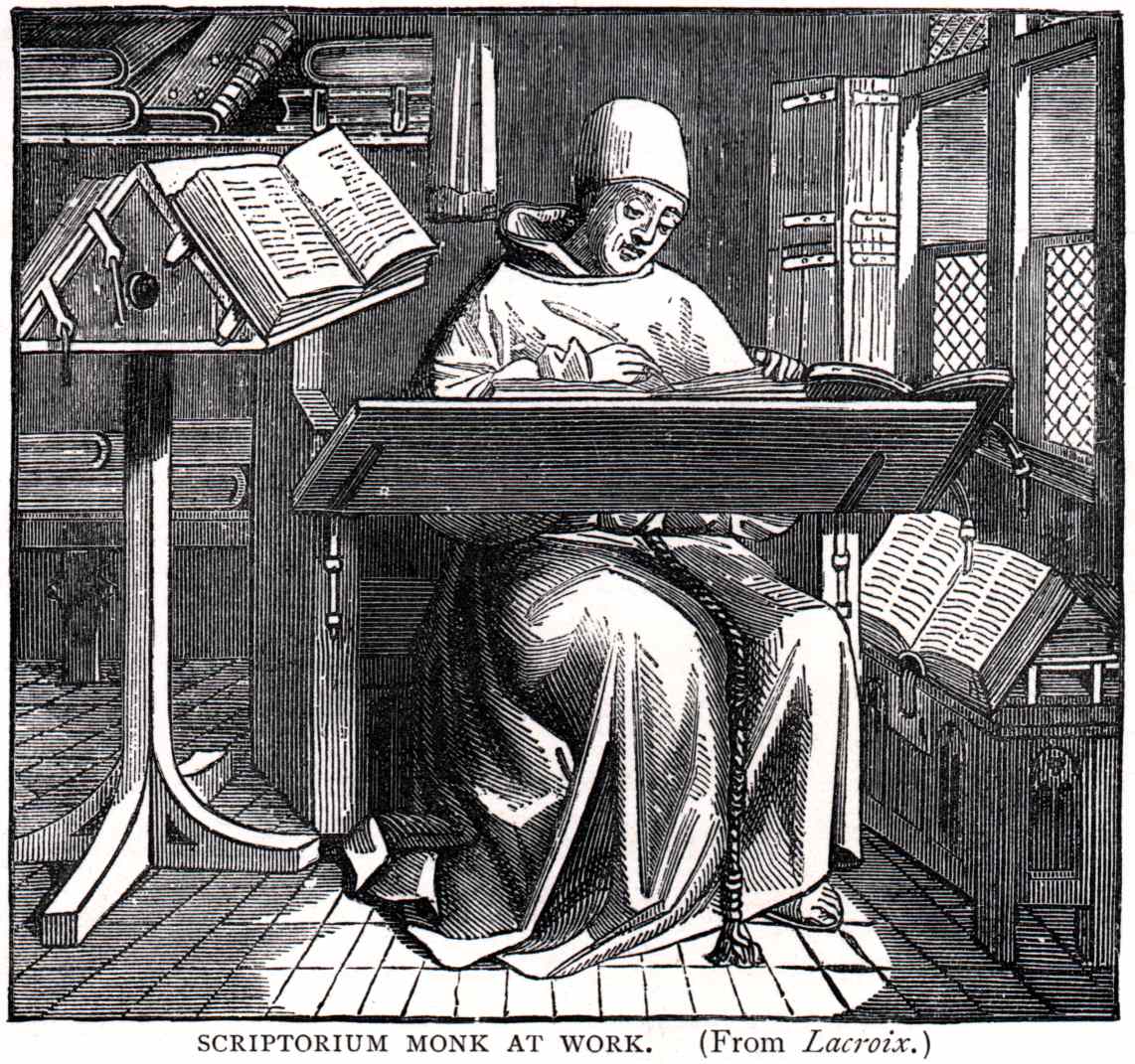
(For the scribes, it was the repetition that led to madness. Thousands of copies of the Canterbury Tales. In Middle English. Think about it.)

Why do I want things to happen too soon? Mainly, it's because I'm totally in love with my characters. And instead of being a grownup about things, I start shipping them with each other (if I'm working on a romantic arc), or I really want this badass moment to happen, because it's finally time that So'n'So gets her vengeance on Whatshername because shit got real awhile ago and they need to hash that out. 

My grandmother always says that part of emotional maturity is putting what is right ahead of personal gratification. For instance, you may really want a chocolate chip cookie. But you have a cavity and that sugar is going to crawl into that little tooth hole and make you scream if you eat it. The mature thing to do would be to put the cookie on hold, get your tooth fixed, and indulge later.

But it's haarrrrd. Especially when it comes to the fictional worlds we create in our minds. I really just want So'n'So to tell Jerkface how she really feels. And that urge leads me to try to rush to that part of the story. 

And that's not right. Especially when there are things--important things--that need to happen in between. Like, you can't just start your story with So'n'So meeting Jerkface and then all the sudden jump to her calling him out. No, there has to be a reason she calls him out for starters, and maybe some other things building up to that moment. And the anticipation is part of the fun, right? Or, at least it is when we're reading.

But for some reason, when writing, I just want to get to THAT part. I think I've become a fangirl for my own work. Like, I am shipping my characters way harder than Ten x Rose or Eleven x Clara or Petyr x Sansa. (Yes, that last one was a creepyship. Get over it.) 

And I don't think it's wrong to do that, as a writer. As a writer, I think it's important to have these juicy, sweet, spicy scenes in mind, letting them ferment and develop in your head. It makes them that much richer when you actually do write them.

I'm not always a writer who writes chronologically. For someone who doesn't really care about writing chronologically, it really doesn't matter. You could write the ending last, for all you care, and I suppose many do. But, I have to say, the majority of my stuff is written chronologically and that's how I get into this predicament. 

So, I've hit a compromise: I map out the gloriously delicious scene with index cards or bullet points--whatever. And then I go back to writing everything else in the order as I planned. (More on planning later.)

And there you have the my temptation: I always want to skip ahead. And doing so can hurt your writing--especially when the in-between bits actually matter, as they so often do. 

So, what about you? Have you ever had a problem with this? What do you do to remedy it? Or do you even try? Let me know what you think in the comments. 

Sunday, June 9, 2013

How to turn people watching into writing

I've been writing for twenty years. How is this possible when I'm only twenty-four? Well, the short of it is that I learned to read and write very young and I had a lot of free time on my hands in preschool. While other kids were eating paste or fighting over who got to have the markers that weren't drying out, I was at the typewriter. And I taught myself how to use that old typewriter, me a child who had been using a computer since I could sit up.

(The Apple II. It was awesome and the computer I grew up on.)

But writing isn't just about the mechanics of being able to type or use a pen. And--especially when you are four--it's more than correct grammar and a very large word count. The best writing starts with--and hinges on--the characters. Without them, your story is nothing, and you as a writer are just a putter of words on paper and nothing more.

Characters are my favorite part about writing, so I will be talking about them a lot on this blog. Get used to it now.

Having a sprained ankle has left me on the sidelines lately. Just the other day, I was stuck sitting in the car while my grandmother bought the groceries. If I thought about how unfair that is on her, and how sick I am of being stuck, I would've gone nuts. Therefore, I endeavored instead to divert myself by--you guessed it--writing.

So, I took out my trusty iPad and got a little bit done. Normally, I'm very focused and when I get my mind on something, I have my nose to the grindstone like the hard worker I secretly am. But, it was the first time the sun had shone in hours and it was turning out to be a beautiful day, so I decided to look around for a moment as I pondered what needs to really be happening in Chapter Four (the dreaded chapter I will probably have more to say about later).

And as I looked up, I noticed that things were happening. The parking lot was more lively than usual. Or, if you want to get all philosophical about it, maybe it was always lively and I just never gave a damn until that precise moment. Either way, I noticed stuff was happening, and it piqued my interest.

For starters, there were about five cars that parked in the handicapped parking space in front of me. From my vantage point, I could only see one with an actual handicapped tag and even that person didn't seem to be very handicapped. They were downright spry. (But then again, as a lupus warrior, I know illnesses can be invisible, so I leave it there.) You can debate on the ethics of taking a handicapped place without a handicapped tag all you want, but what really interested me--and it was kinda ironic-- was the progressive surface athleticism that the people who parked there seemed to possess. Again, for all I know they have leprosy or something, but the last people I saw park there were cyclists and quite sporty and they all hopped out of their SUV with seeming effortlessness like it was the easiest thing in the world, each one young, fit and tan.

And that's the thing about writers. To understand the human condition, we don't have to be psychologists, but we do have to notice people, observe them, and be aware of their quirks...such as parking in the handicapped space when they are probably not actually handicapped.

And then there is the action sequence. For me, it was hard to get the hang of writing action sequences, and my novels are pretty action-y, and that action is necessary for the story, ergo, it was necessary for me to learn it.

So, while in the parking lot, I watched a young woman, no bigger than a chigger as her shopping cart became possessed. Literally, I had no idea how it did this--but it just started spinning, and it careened into the parking lot, into traffic. And without consideration for life and limb, she dove after it. She literally dove. Somehow, this petite woman became Stretch Armstrong (remember him?) and she managed to grab the wayward cart right before it slammed into a car, thus saving somebody, somewhere, from being sued, futile though it might've been as far as lawsuits go.

And as I witnessed this random, really cool, and moderately dangerous moment, I realized that if I had described it word for word in quick, short sentences, it would've made a really cool if somewhat benign action sequence. If anything, it would've been a neat writing exercise. Because here, I watched and I saw. I saw the way the way her brown hair flowed in the wind, the way her body flew like an arrow, the way telekensis seemed to be involved. I saw it all and it was real. It was a real moment that would actually be pretty cool if it was written for the screen, where the audience could see the nuance, the humor and the general well-timed perfectness of that one short moment.

And then I noticed the old man with the surgical mask. He had a boy with him, most likely his grandson. Having lupus, I know many people who wear masks. They are my friends. And I know what they feel like, as well as anyone other than them can know. And knowing what I know, I know how brave that man must be to brave a supermarket, even with his mask on. Because, wearing that mask, chances are he has some sort of illness that lowers his immunity. Maybe it's autoimmune like lupus. Maybe it's some kind of cancer. Either way, he probably feels like absolute crap. But there, he trucks right on through the store to get his grandkid the snacks he wants, not complaining once. He is the everyday hero who makes all of our petty problems seem like nothing.

All of these people I described--they're people, true--but they'are also characters. And it's all about descriptions. When you people watch, you're just an observer. You notice quirks. Sometimes you even see miracles and heroism. The point is, you just gotta notice things. I promise it'll make you a better writer. It has me.